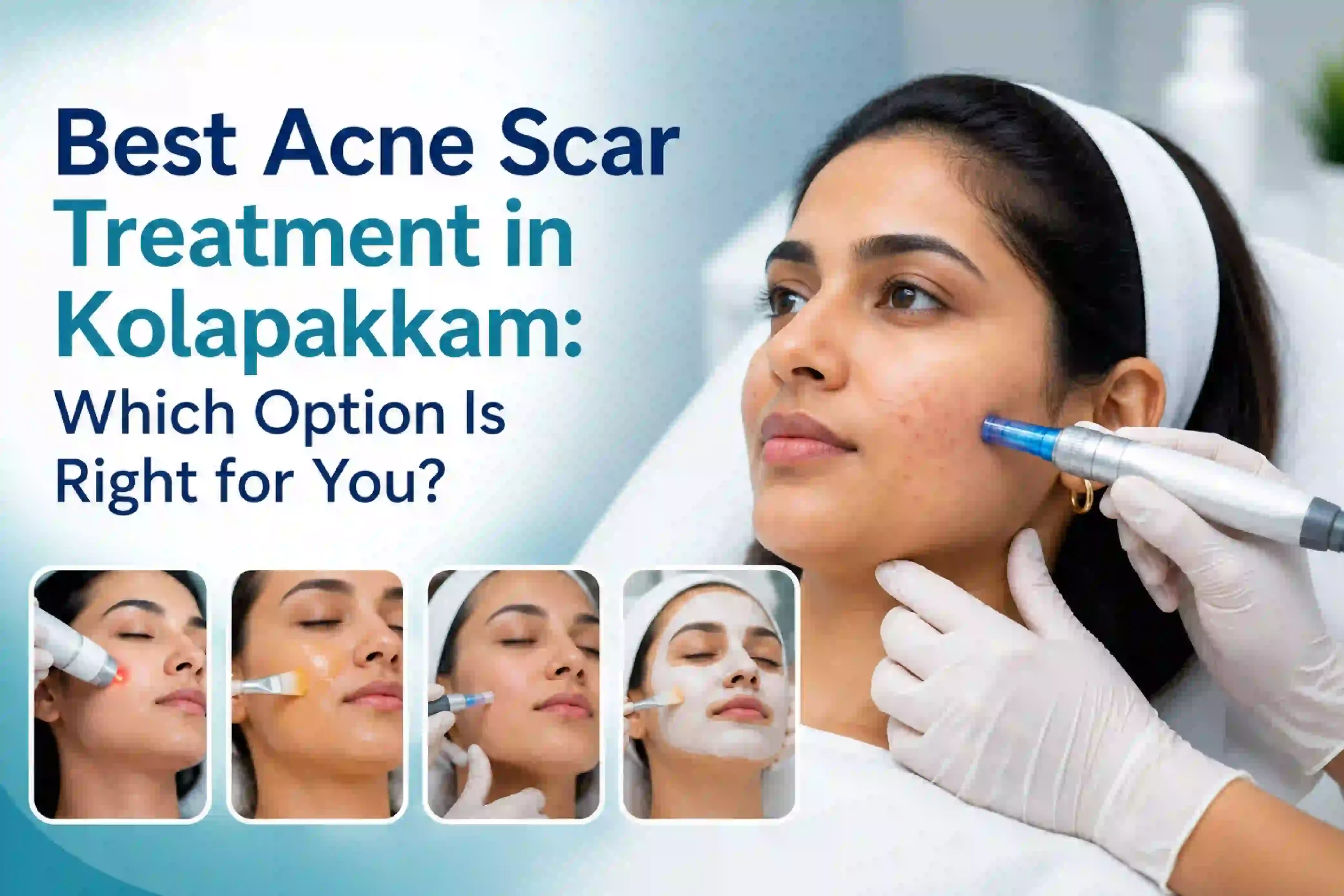
What Are Acne Scars?
Acne scars form when inflamed acne lesions damage the skin’s deeper layers during the healing process, resulting in either a loss of tissue (creating indentations) or excess collagen production (creating raised marks). Unlike temporary post-acne marks or redness, true scarring involves a textural change to the skin that generally doesn’t fade entirely on its own.
Common Causes of Acne Scarring
– Inflammatory acne, such as cysts or nodules, which tend to cause deeper tissue damage
– Picking or squeezing acne lesions, which can worsen inflammation and scarring risk
– Delayed treatment of active acne, allowing inflammation to persist longer
– Genetic predisposition, as some individuals are more prone to scarring than others
– Skin type and healing response, which vary from person to person
Types of Acne Scars
Scar Type | Appearance | Common Treatment Approach |
Ice pick scars | Narrow, deep, pitted indentations | Often require deeper resurfacing techniques |
Boxcar scars | Broad, box-like depressions with defined edges | May respond to fillers, peels, or laser treatment |
Rolling scars | Wave-like, undulating texture | Often addressed with subcision or microneedling |
Hypertrophic/keloid scars | Raised, thickened tissue | May involve different approaches, such as steroid injections or laser |
Who Is an Ideal Candidate for Treatment?
Most individuals with visible acne scarring who are looking to improve skin texture may be candidates for some form of treatment, though the ideal approach depends on scar type, skin tone, and overall skin health. It’s generally recommended that active acne be brought under control before starting scar-focused treatment, since ongoing breakouts can complicate results.
Treatment Options for Acne Scars
Topical Treatments
Prescription retinoids and certain topical formulations may help improve mild scarring and overall skin texture over time, though they’re generally more effective for superficial concerns than deeper scars.
Chemical Peels
Chemical peels use controlled exfoliation to improve surface texture and tone, often suitable for milder scarring or as a complementary treatment alongside other approaches.
Microneedling
This technique creates controlled micro-injuries to stimulate collagen production, often used for rolling or boxcar scars, sometimes combined with other treatments for enhanced results.
Laser Acne Scar Treatment
Laser resurfacing works by targeting the skin’s deeper layers to stimulate collagen remodeling, and is often considered for moderate to deeper scarring, particularly boxcar and some ice pick scars, depending on individual assessment.
Dermal Fillers
Temporary fillers can help raise the base of certain depressed scars, offering a non-permanent option for improving surface appearance.
Your specialist will typically recommend a combination approach rather than a single treatment, since different scar types on the same face often respond better to different techniques.
Benefits of Professional Treatment
Professional acne scar treatment can meaningfully improve skin texture and overall appearance for many patients, though the extent of improvement varies based on scar type, severity, and individual skin response. Treatments are generally aimed at improvement rather than complete scar removal, and realistic expectations discussed during consultation help guide treatment planning.
What to Expect During Treatment
Most in-clinic acne scar treatments involve an initial numbing period, followed by the procedure itself, which may cause mild discomfort depending on the technique used. Many treatments, such as microneedling or laser resurfacing, require multiple sessions spaced weeks apart to achieve gradual, cumulative improvement, rather than a single-visit solution.
Recovery & Aftercare
Recovery varies by treatment type. Chemical peels and microneedling typically involve some redness and mild peeling for a few days, while laser treatments may involve slightly longer downtime depending on intensity. Sun protection is particularly important during recovery, as treated skin can be more sensitive to UV exposure. Your specialist will provide specific aftercare guidance based on the treatment performed.
Lifestyle Tips to Support Healthy Skin
– Use sunscreen consistently, as UV exposure can worsen the appearance of scarring and pigmentation
– Avoid picking at active acne to reduce the risk of new scarring
– Maintain a gentle skincare routine that doesn’t over-exfoliate or irritate the skin
– Stay consistent with any prescribed topical treatments for active acne management
– Be patient with results, as scar improvement is typically gradual across multiple sessions
Frequently Asked Questions
When Should You Consult a Specialist?
Consider scheduling a consultation if acne scarring is affecting your confidence, if home remedies and over-the-counter products haven’t improved your skin’s texture, or if you’re unsure which scar type you have and what treatment might genuinely help. A professional assessment is the most reliable way to understand your specific options.
Why Choose Shape Wellness?
At Shape Wellness in Kolapakkam, our clinical team takes a personalized approach to acne scar treatment, beginning with a thorough skin assessment to understand your specific scar type and skin condition before recommending a treatment plan. We offer a range of treatment options and prioritize realistic, honest conversations about what each approach can achieve, rather than overpromising results. Our team focuses on education first, helping you understand your skin before any treatment decision is made.
Conclusion
This article is intended for general informational purposes and does not replace professional dermatological advice. Please consult a qualified skin specialist to discuss your individual condition and treatment options.