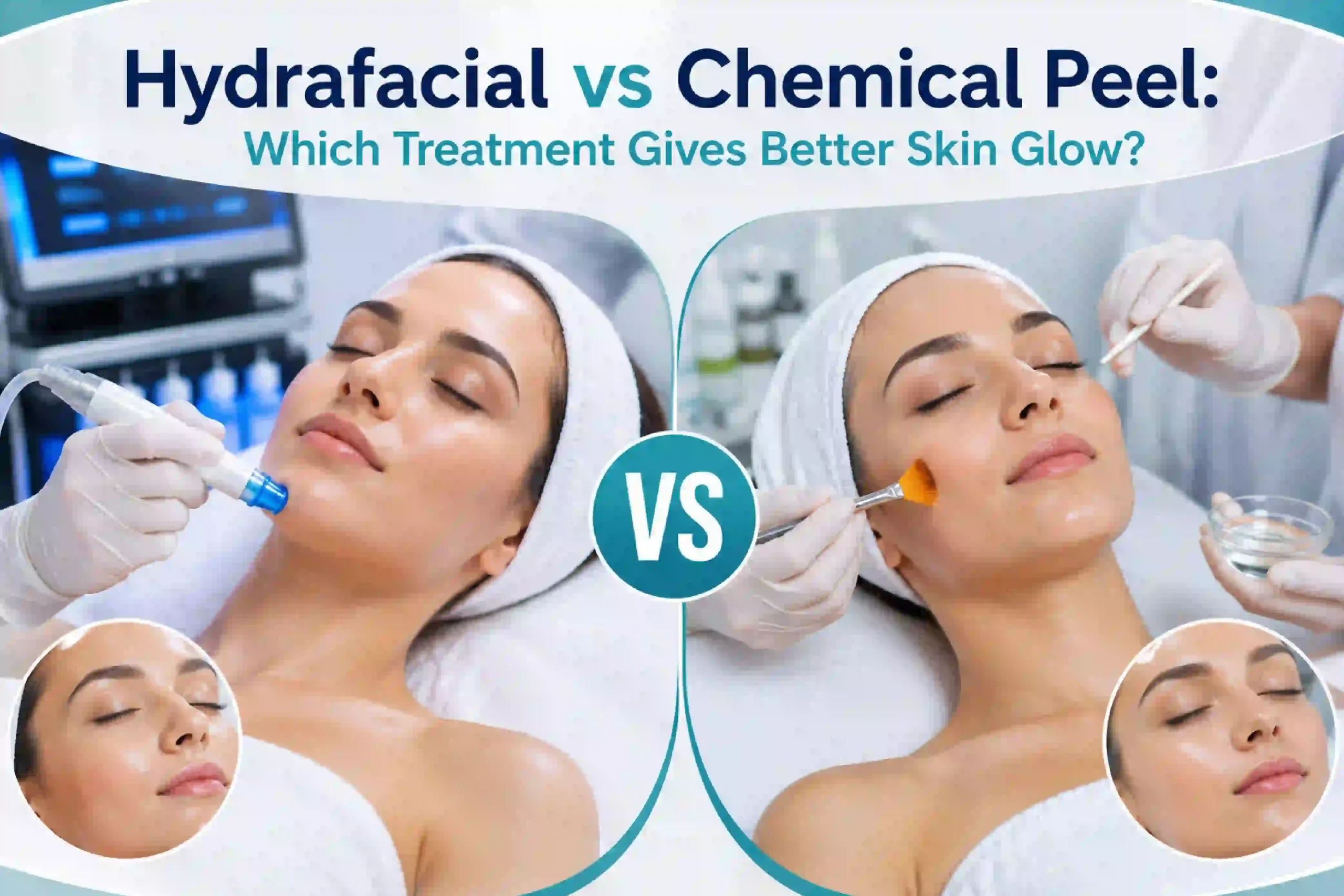
What Is Hydrafacial?
Hydrafacial is a multi-step, device-based facial treatment that combines cleansing, gentle exfoliation, painless extraction of debris from pores, and infusion of hydrating serums, all performed using a specialized handheld device. It’s designed to refresh the skin’s surface and improve hydration and radiance in a single session, with results typically visible immediately afterward.
What Is a Chemical Peel?
A chemical peel involves applying a controlled acid solution to the skin’s surface to exfoliate damaged or dull outer layers, encouraging cell turnover and revealing fresher skin underneath. Peels vary in depth, from superficial peels addressing mild dullness to medium peels targeting more specific concerns like pigmentation or textural irregularities, with deeper peels generally involving more noticeable peeling and downtime.
Key Differences Between Hydrafacial and Chemical Peel
| Factor | Hydrafacial | Chemical Peel |
| Mechanism | Cleansing, extraction, and hydration infusion | Controlled acid-based exfoliation |
| Downtime | Little to none | Varies, mild peeling possible depending on depth |
| Best suited for | Overall glow, hydration, mild congestion | Pigmentation, acne scarring, deeper texture concerns |
| Immediate results | Yes, visible right after treatment | Gradual, as skin peels and renews over following days |
| Session frequency | Often used as regular maintenance | Typically spaced out based on peel depth and skin response |
| Discomfort level | Generally very gentle | Mild tingling or stinging depending on peel strength |
Who Is an Ideal Candidate for Each Treatment?
Hydrafacial tends to suit individuals looking for an immediate glow boost, mild hydration, or gentle exfoliation without downtime, making it popular before events or as part of regular skin maintenance. Chemical peels tend to suit individuals with more specific concerns, such as pigmentation, acne scarring, or uneven texture, who are comfortable with some visible peeling during the recovery period. A professional skin assessment helps determine which approach, or combination, fits your specific skin type and concerns.
Hydrafacial vs Chemical Peel for Acne
For active acne, hydrafacial’s gentle extraction and hydration approach can help refresh congested skin without significant irritation, making it a comfortable option for some patients. Chemical peels, particularly those formulated with acne-targeting acids, can address both active breakouts and post-acne concerns like scarring or pigmentation more directly, though peel selection depends heavily on your specific skin type and acne severity, which should be evaluated by a specialist before treatment.
Which Facial Is Best for Dull Skin?
For general dullness without significant pigmentation or textural concerns, hydrafacial often provides a quick, visible improvement in radiance due to its hydration and gentle exfoliation combination. If dullness is accompanied by uneven tone or deeper textural issues, a chemical peel may offer more targeted improvement over a series of sessions. Many patients find that a combination approach, alternating or combining both treatments, works well depending on their skin’s response.
Benefits of Each Treatment
Hydrafacial Benefits
Immediate hydration and glow, gentle enough for regular use, minimal irritation risk, and suitable for most skin types, including sensitive skin.
Chemical Peel Benefits
Targeted improvement for pigmentation, acne scarring, and texture concerns, with results that build progressively over a series of treatments, often addressing more specific, persistent skin issues.
What to Expect During Treatment
A hydrafacial session typically involves a comfortable, spa-like experience with a device moving across the skin, generally taking under an hour with no discomfort reported by most patients. A chemical peel session involves the acid solution being applied for a set time, which may cause mild tingling or warmth, followed by neutralization, and patients may notice redness immediately afterward that typically subsides within a day or two for lighter peels.
Recovery & Aftercare
Hydrafacial involves essentially no downtime, most patients can resume normal activities and even wear makeup immediately after treatment. Chemical peels, depending on depth, may involve visible peeling for several days, during which sun protection becomes especially important, as treated skin is more vulnerable to UV exposure. Your specialist will provide aftercare guidance specific to the peel strength used.
Lifestyle Tips for Long-Term Glow
– Use sunscreen daily, regardless of which treatment you choose, since UV protection supports and preserves results
– Stay well-hydrated and maintain a balanced diet to support overall skin health
– Avoid picking at peeling skin after a chemical peel, as this can affect healing and results
– Maintain a consistent, gentle skincare routine between treatments
– Space out treatments as recommended by your specialist rather than over-treating your skin
Frequently Asked Questions
When Should You Consult a Specialist?
Consider scheduling a skin assessment if you’re unsure which treatment suits your specific concerns, if you have persistent dullness, pigmentation, or acne-related issues that haven’t improved with at-home skincare, or if you simply want personalized guidance before committing to a treatment plan.
Why Choose Shape Wellness?
At Shape Wellness, our clinical team offers both hydrafacial and chemical peel treatments, tailoring recommendations based on a thorough assessment of your skin type, concerns, and goals rather than a one-size-fits-all approach. We prioritize honest guidance about what each treatment can realistically achieve, helping you choose the option, or combination, that genuinely fits your skin’s needs.
Conclusion
This article is intended for general informational purposes and does not replace professional dermatological advice. Please consult a qualified skin specialist to discuss your individual skin type and treatment options.